We talk a lot about taking care of yourself during pregnancy. Prenatal vitamins. Check-ups. Nutrition. Exercise. Sleep. Preparing for birth. But what about the weeks and months before pregnancy?
That period has a name: preconception health. And according to the Public Health Agency of Canada, your health before conception can influence fertility, pregnancy, your health after birth, and your child's health throughout their life. In other words, pregnancy preparation doesn't necessarily begin with a positive test.
It can begin much earlier, with taking care of yourself.
And no, that doesn't mean trying to achieve some impossible version of “perfect health” before having a baby. It means paying attention to the things that can genuinely make a difference, while giving yourself a little more space to listen to your body.
What is preconception care, exactly?
Preconception care is healthcare and lifestyle support before pregnancy. It can include reviewing medications, vaccinations, nutrition, physical activity, medical conditions, mental health, substance use, environmental exposures and other factors that could affect a future pregnancy. Both Canadian public health guidance and the American College of Obstetricians and Gynecologists recommend addressing these factors before conception rather than waiting until pregnancy has already begun. And there is a practical reason for starting early.
According to ACOG, the first 8 weeks of pregnancy are when major organs develop. That means some important stages of development happen very early, sometimes before someone even realises they're pregnant. That's one reason preconception health deserves more attention.
The 400-microgram detail worth knowing
If there is one number worth remembering from the preconception conversation, it's 400 µg. Health Canada recommends that anyone who could become pregnant take a daily multivitamin containing 400 micrograms (0.4 mg) of folic acid. If you're planning a pregnancy, Health Canada says folic acid should ideally be started at least 3 months before pregnancy.
Why? Folic acid helps reduce the risk of neural tube defects, which affect the developing brain and spinal cord. The neural tube develops very early in pregnancy, which is why getting enough folic acid before conception matters. The CDC similarly recommends 400 µg of folic acid daily and advises starting at least one month before conception. The exact advice can differ for people with certain risk factors, so this is one of those situations where speaking with your healthcare provider is much better than trying to work it out from Instagram.
Preconception health is more than supplements
It's easy to turn preparation for pregnancy into a shopping list. Prenatal vitamin. New water bottle. New workout plan. Perhaps a collection of supplements with names nobody can pronounce. But the science is broader than that. The Public Health Agency of Canada identifies several areas that can be addressed before conception, including healthy eating, physical activity, vaccinations, medication review, smoking cessation, alcohol use, mental health, STI prevention and management of existing health conditions. This is also why “self-care” before pregnancy should not be confused with a wellness trend. Sometimes self-care is a yoga class. Sometimes it's booking the medical appointment you've been postponing. Sometimes it's getting help with pain you've learned to ignore. And sometimes it's simply admitting that you're exhausted and something in your routine needs to change.
Your body doesn't suddenly become important when you're pregnant
This is something Lucile Delorme, founder of Bonjour Osteopathy in Vancouver, thinks is worth remembering. Lucile graduated from l'Institut Toulousain d'Osteopathie in 2009 after six years of osteopathic training. She later opened her own practice in France before moving to Vancouver in 2020. Her training includes pre- and post-natal conditions, pelvic floor conditions, lactation counselling, hormonal issues, sports injuries and pain management. Her own path into osteopathy was not entirely planned, either. While studying finance, Lucile experienced a knee problem that had affected her since adolescence. After seeing an osteopath and experiencing a significant improvement, she became interested in osteopathy herself. She eventually changed careers and spent six additional years studying the profession. Today, her approach is centred around looking at the body as a whole rather than treating every symptom in isolation. That perspective can be particularly interesting when thinking about pregnancy.
You don't have to wait until your body is under a completely new physical load to start paying attention to how it moves and feels. Says Lucile
Preparing your body doesn't mean “fixing” it
There is a subtle trap in the idea of pre-pregnancy self-care. It can quickly become another source of pressure. Am I fit enough? Is my diet good enough? Is my weight right? Am I sleeping enough? Have I done enough? But preconception health isn't about passing a test. Canadian guidance describes preconception care as an opportunity to identify and modify medical, behavioural, psychosocial and environmental factors that could affect reproductive health and future pregnancies. That is very different from trying to make your body “perfect.” Instead, think of it as creating a better starting point.
If you have persistent back or pelvic discomfort, for example, you don't necessarily need to wait until pregnancy makes movement more challenging before discussing it with an appropriate healthcare professional. If you already have a medical condition, medications or concerns about your health, a preconception appointment gives you an opportunity to address them before pregnancy. And if you're feeling well? That's great too. Self-care doesn't always mean fixing something that's broken.
This isn't only about women...
Preconception health is often presented as something women need to think about. But Canadian public health guidance defines preconception health as the health of both men and women during their reproductive years. It also recognises that the health of parents before conception can contribute to the health of their future children. That makes sense when you think about it. Preparing for a baby is something two people can participate in. Healthy eating, physical activity, avoiding smoking, reviewing health concerns and making healthier lifestyle choices don't need to become one person's responsibility simply because pregnancy will happen in one person's body.
Preconception care can be a shared conversation.
Where can osteopathy fit into pre-pregnancy self-care?
This is where it's important to keep the claims realistic.
Osteopathy is not a fertility treatment, and there is not sufficient evidence to say that osteopathic treatment increases your chances of becoming pregnant.
What osteopathic care can offer is different.
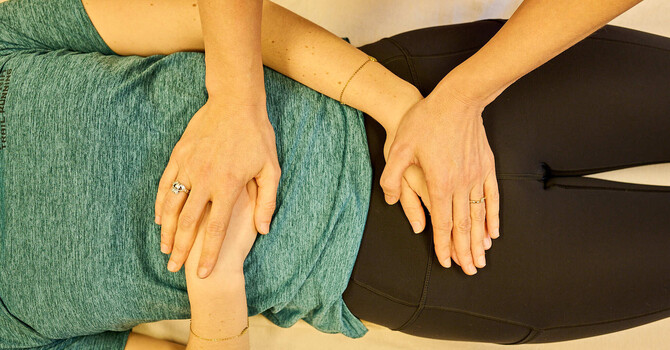
At Bonjour Osteopathy, Lucile uses a hands-on and somatic approach and performs a whole-body assessment. Her professional training includes pre- and post-natal conditions and pelvic floor conditions, among other areas. For someone preparing for pregnancy, that may mean addressing existing musculoskeletal discomfort, exploring movement and mobility, or simply becoming more aware of how the body is functioning. It is one part of a broader approach to health, alongside appropriate medical and prenatal care. And that distinction matters.
A realistic pre-pregnancy checklist
You don't need to change your entire life tomorrow. If you're thinking about pregnancy, a practical starting point could be:
- 1. Book a preconception appointment. Discuss your medical and family history, medications, supplements, vaccinations and any existing health conditions with your healthcare provider.
- 2. Think about folic acid. For most people who could become pregnant, Health Canada recommends 400 µg of folic acid daily, ideally beginning at least 3 months before pregnancy.
- 3. Keep moving. Regular physical activity supports general health and wellbeing and is part of Canadian preconception health guidance.
- 4. Look at the basics. Nutrition, sleep, alcohol, smoking and other lifestyle factors are worth considering before pregnancy, not only after the test turns positive.
- 5. Don't ignore persistent pain. If something has been bothering you for months, pregnancy may not be the ideal time to start wondering why. Consider discussing it with an appropriate healthcare professional.
- 6. Include your partner. Preconception health is not exclusively a woman's responsibility.
The best self-care might be starting earlier
There is something reassuring about the idea of preconception care. It doesn't ask you to control everything. It simply gives you more time. More time to review your health. More time to build useful habits. More time to address something that's been bothering you. More time to ask questions. And perhaps most importantly, more time to stop thinking of your body as something you only need to worry about once pregnancy begins. At Bonjour Osteopathy in Vancouver, Lucile Delorme works with patients through different stages of life, including pre- and post-natal care. Her approach is individualised, hands-on and focused on understanding the person rather than simply chasing a symptom.
You don't have to wait for the positive test to start taking care of yourself. Sometimes, the healthiest place to start is simply with a conversation.
Thinking about pregnancy?
If you're in Vancouver and wondering whether osteopathic care could be appropriate for you before, during or after pregnancy, Lucile Delorme at Bonjour Osteopathy can discuss your individual needs and approach. Book an appointment with Bonjour Osteopathy
Quick answers about preconception self-care
- Is self-care before pregnancy important?
Yes. Preconception health can influence fertility, pregnancy health and the health of the future child. Canadian public health guidance recommends addressing health and lifestyle factors before conception rather than waiting until pregnancy begins.
- When should I start preparing for pregnancy? There is no single “perfect” starting date. However, some measures need to begin before conception. For example, Health Canada recommends starting 400 µg of folic acid daily ideally at least 3 months before pregnancy.
- What should I discuss with my doctor before pregnancy? A preconception appointment can cover medical and family history, medications and supplements, vaccinations, nutrition, lifestyle, existing medical conditions and other factors that may affect pregnancy.
- Does preconception health concern both partners? Yes. Canada's public health guidance considers preconception health relevant to both men and women during their reproductive years.
- Can osteopathy improve fertility? Osteopathy should not be presented as a proven fertility treatment. At Bonjour Osteopathy, osteopathic care is instead focused on individualised hands-on care, movement, musculoskeletal concerns and supporting patients through different stages of life, including the pre- and post-natal periods.
Medical & scientific sources
Public Health Agency of Canada , Preconception health
Health Canada, Folic acid and pregnancy
ACOG , Prepregnancy Counseling

Lucile Delorme
Contact Me